Thursday, September 27, 2012

(We can) Trust the Sea


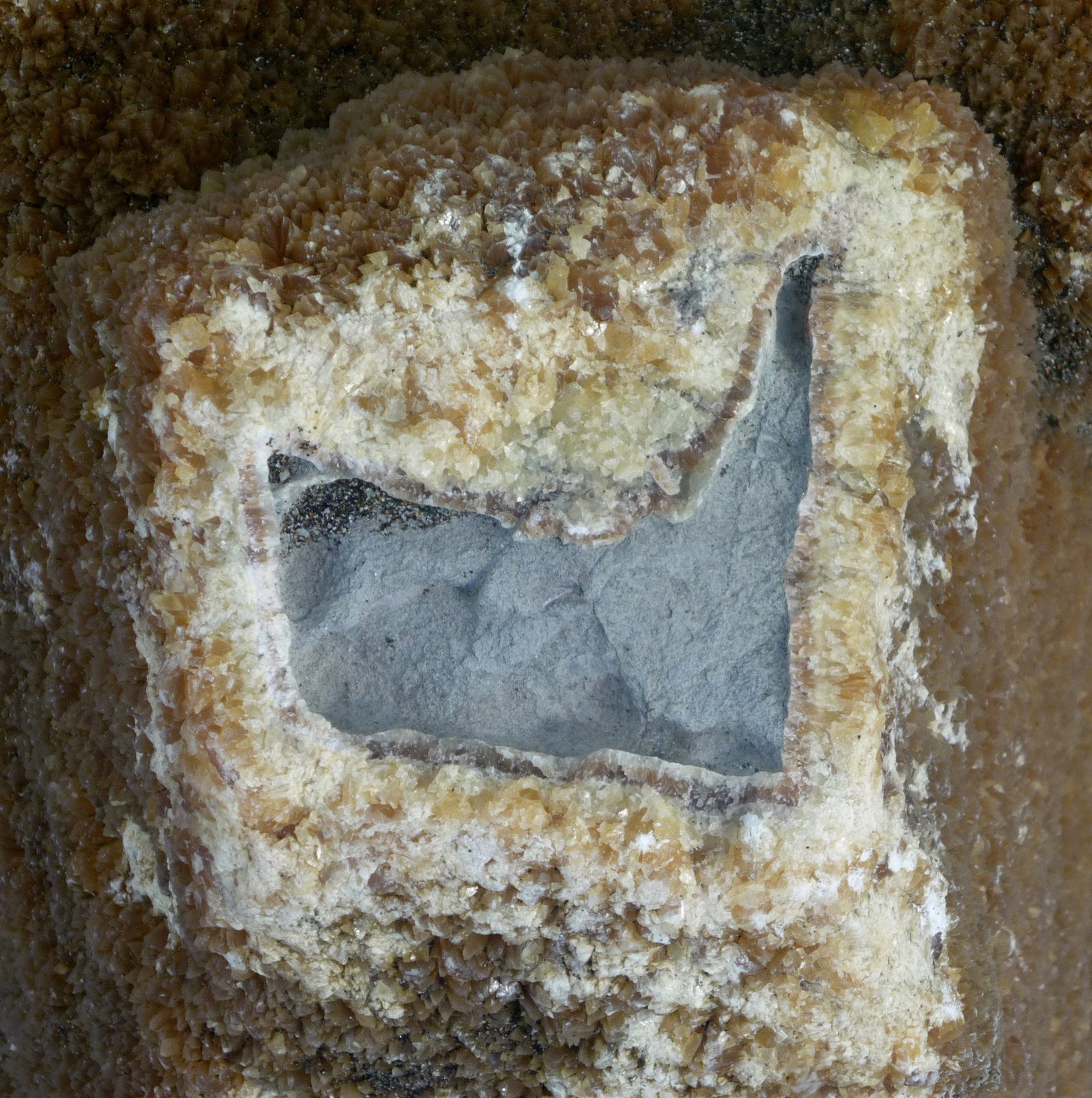
We can trust the sea
to wrap haloes around hard places


trust it to organize what sometimes seems too much or too brittle 
into patterns of intricacy, intention and beauty.


Infant barnacles colonize a rock's 
deep crevices, transforming them into mooring places 
where new life burgeons. 


The sea knows what to hold
what to release 
and when 


relies on the tides' insistence

and assistance


And sometimes. . . well, sometimes it seems we must stand 
on our heads and do flick-flacks before we see - or can recognize - 
there's a small flinty continent inside each and every one of us 
that is all things at once; breastplate, boat, ancient instrument, stepping stone, ocean, heart. . .


Friday, September 21, 2012

A Mandala for WORLD PEACE


In 1982, the UN established 21 September as INTERNATIONAL PEACE DAY


        Te Rangimarie  _/\_ May Peace Prevail


Friday, September 7, 2012


                                                       In the great oceans there still remain parts
                                                       whose waters have never been disturbed
                                                       by the sounding line of the sailor 
                                                       and where dark, unfathomable places 
                                                       hold secrets in beautiful store.
                                                       And in spite of the diligent searching of men
                                                       an untold wealth still lies hidden 
                                                       in the depths of the earth. 


Monday, September 3, 2012

TODAY'S READING


You may be interested in what's being said on the following sites --- 


NUCLEAR FREE PLANET

COUNTERPUNCH

HELEN CALDICOTT

&

BRAINPICKINGS where I came upon the film WHALE FALL - "In an homage to a fascinating recent Radiolab episode about loops, which features an almost-aside about how when a whale dies, its body can sustain an entire microcosm of an ecosystem for up to seven years in a poetic death-life loop, director-animator duo Sharon Shattuk and Flora Lichtman, better known as Sweet Fern Productions, collaborated withRadiolab’s own Lynn Levy on Whale Fall — an equally poetic and absolutely stunning paper-cutout stop-motion animation about the afterlife of a whale. . ."


Friday, August 31, 2012

THE JOURNEY HOME - An Oratorio composed by John Drummond


from the Otago Daily Times

"To commemorate the centenary of Captain Scott's ill-fated journey to the South Pole, the Southern Sinfonia is presenting the world premiere of The Journey Home. Charmian Smith talks to composer Prof John Drummond.
Captain Robert Falcon Scott's last landfall in 1910 before sailing to the Antarctic was Port Chalmers, where there is a memorial, and the news of his team's death came ashore at Oamaru in 1913.
John Drummond has written an oratorio to mark the anniversaries.
The Southern Sinfonia will perform his The Journey Home on September 8.
The idea started when Prof Drummond received a text developed from Scott's journal by librettist and opera historian Jeremy Commons about four years ago. He suggested setting it for baritone and piano, but Prof Drummond thought a significant event like this might need something else.
He looked at poems about the Antarctic by New Zealand poets who had been there and found evocative works by Claire Beynon, Chris Orsman and Bill Manhire.
"I thought it would be nice to do this for a series of soloists - a baritone who could sing Scott's journal, a soprano and tenor who could do the poems.
Then I thought, let's have an orchestra. Then I thought if we are going to go that far, why don't we add a choir. Make it a proper cantata or oratorio." He planned to add texts from the Latin requiem mass, but Commons persuaded him Scott wasn't a Catholic so he found appropriate texts in the Anglican Book of Common Prayer.
"It finished up with quite a lot of text. Jeremy's text covered the whole of the expedition from the beginnings, but the more I looked at it, the more I felt the interesting part of the story was the last part, which happened 100 years ago this year," Prof Drummond says.
"When Scott realises he isn't the first to reach the South Pole but the second, because Amundsen had beaten him by five weeks or so, that must have been a very disappointing and traumatic moment for him. The journey home from the pole and the sense he hadn't achieved what he wanted to achieve. That became something I wanted to explore."
The Journey Home starts with Scott and his party's disappointment and the prospect of the journey ahead.
They think it will be a journey back to his base camp and then home to England, but as the weather grew worse and then he and his companions struggled, it became a journey to a different home, one we are all going to in the end, a journey to the home of death in the Antarctic, Prof Drummond says.
"I wanted to explore his feelings throughout that experience, but not make it a totally gloomy and tragic business, because I don't think it's necessarily like that. I think what those texts, the Common Prayer texts are trying to do, is to remind us there are things beyond life; there are things beyond this world and there is a spiritual dimension. I want to tap into that. I suppose what I'd like people to feel at the end is an awareness of the tragedy of it all, but I don't want everyone to end up weeping.
"The journey is about contact with things eternal, really, and I think that's one of the things music can do quite well because it can go beyond words and speak directly of other things to us."
Scott made mistakes in his planning for the expedition and the weather was unexpectedly bad, with blizzards and extremely low temperatures.
However, Prof Drummond suggests that another factor making the return impossible might have been Scott's state of mind, his disappointment at having not been the first to the pole.
"It's like getting the silver medal - yes, you are really pleased to have done it, but you had hoped to get the gold. Your state of mind is bound to be slightly different in those circumstances."
He particularly enjoyed setting the poems - there's a wonderful one by Bill Manhire, The Goddess Hypothermia.
"He's written it like the Goddess Hypothermia has come to embrace me. It's a very clever little poem because it's got this amorous flavour to it but nonetheless, underneath, you know it's something very dangerous. I love that poem and really enjoyed having the opportunity to set that."
A more difficult piece to set was the famous quotation by Captain Oates.
"Everyone knows he said 'I'm just going out and may be some time', and it's one of those lines people use in other circumstances, so trying to set that without it becoming funny just because of the associations was very interesting. I had to have quite a few goes at that. I hope it works in the context."
There's a poignant passage in Scott's journal, when he realises he won't see his son again, that Prof Drummond set as an aria for the baritone.
"Scott's son was Peter Scott, who was a great naturalist in the UK, and the song talks about how he hopes his son will grow up to love nature. Having met Peter Scott many years ago - he was a friend of my sister's - I felt it was a really nice poem to set because that is what did happen."
Prof Drummond says he writes music he wants people to enjoy listening to and musicians will enjoy performing, which means they will communicate well with the audience."


See it - John Drummond's The Journey Home will be given its premiere performance on September 8 at 8pm at the Regent Theatre by the Southern Sinfonia, conducted by Simon Over, with soprano Jenny Wollerman, tenor James Rodgers, baritone Robert Tucker and the City of Dunedin Choir. Also on the concert programme are Tchaikovsky's Capriccio Italien and Stravinsky's The Firebird Suite.


Monday, August 27, 2012

LAKE VOSTOV


My writer friend SUSAN LANDRY (Portland, MAINE, USA) wrote the following exquisite and piercing piece in response to a New York Times article ---  


"I have remained obsessed with the news about the discovery of a fresh-water lake beneath the ice at Vostok station, in Antarctica. 

RUSSIAN SCIENTISTS BORE INTO ANCIENT ANTARCTIC LAKE
(Dr. Luckin, director of the expedition, said, ‘For me, the discovery of this lake is comparable with the first flight into space.’ There have been much–disputed hints that life might still exist there. New York Times 2/08/12)

We live in a pale globe, haloed in the light of underwater moons. Like the blood of a medusa, we are diaphanous; woven of silken threads, spun from microbial skeins, soft as smoke. The skin of our world glows overhead, a membrane holding in fluid and song. We have words; not to say out loud, just to look at. We press them into shapes or memories and release them. The word called blue can be sky or long afternoons. Brown can be sand pebbles or an empty heart. Like birds, blue and brown can soar and glide. They can spin like star motes or flatten, like feathers in a storm.

We dance. The space between us is sacred. The space around us is eternity. We never ask questions. We do not begin or end.

We are crying. There is too much noise, a dark thrum, like music that is wrong, like music with sharp edges.

We are afraid to look: the words break like black ice; splinters of red pierce the grey green sky. Our eyes hurt; we want to shut them, lock them tight as fossils. Our ears are curling up, like seashells. Words like drill or science or discovery pulse through the water like words for pain. We are dying."


Susan blogs here. 


Saturday, August 25, 2012

IT IS ALL ONE WATER


On The Edge Of The Clearing Weather | Claire Beynon | Oil on Paper 2010


‘It is all one water – a finger in a tide pool brings us all together’ 
Marylinn Kelly


Water, in its many forms and expressions, has been an integral feature of my work for the past three decades - as raindrop and storm, puddle, waterfall, river, ocean, sea ice and glacier. Aside from painting and drawing and creating short narrative films, I fold paper boats - at last count my flotilla numbered around 1600. Since I first began making them in 2007, these boats have taken on a life and presence all their own. You can read their story HERE

Concern about the declining health of our world's waterways prompted me to invite members of the blogging community to participate in a project titled Waters I Have Known.  (http://icelines.blogspot.co.nz/2010/10/invitation-from-me-and-sea.html). My wish was to create an open, online studio, a space where I could post images of work-in-process, share web links, invite questions, ideas and discussion. This site is the result.  

Waters I Have Known documents recent water-related projects. Some have been solo endeavors - the majority have had a collaborative element to them. 

Early paintings in the Waters I Have Known series were a response to the oil catastrophe in the Gulf of Mexico. A stream of lively debate around the power, wonder and fragility of our world’s oceans was already under way when I suggested to readers we take our discussion further and contemplate the internet as an ocean of a different kind. Moved by the range and richness of texts gifted in response, I incorporated their words in several G ULF paintings, including an 'ocean of words’ titled Standing In The Heart. These texts were also worked into a collaborative poem* that became the narration for a 2011 climate change film Love The Waters. 

                                              
                                                 In the wide sound of the sea
                                                 the song of a vast adventure
                                                 a music that follows flight
                                                 paths of blood rushing 
                                                 through veins. And the roar 
                                                 of the sea is the roar of our planet. 
                                                 
                                                 Salt. Spray. Ice. Sand.
                                                 
                                                 Each wave a limb of the earth.

                                                 The oceans are hoarders 
                                                 of holy mysteries, generous 
                                                 to a fault - all heaving movement,
                                                 energy and gorgeousness; life
                                                 packed into every inch and drop
                                                 of it; ah, its drama! Its secrecy.
                                                 The way it carries the past, future
                                                 and present in it.

                                                 Dream of the sea and from its edge
                                                 gaze out to the pencil-thin line
                                                 of the horizon where sky and water
                                                 are one. And the sea? 
                                                 How it murmurs. 
                                                 How it murmurs.  


                                                 It is all one water.
                                                 
                                                 A finger in a tide pool 
                                                 brings our shores together


One of the things that struck me during this web-based process was the generosity with which these men and women – most of whom have never met – responded to my call. A community comprising writers, artists, scientists, musicians, a police detective and a nun, they hail from places as far-flung as Ireland, Australia, USA, Germany, the UK, South Africa, Italy and Tasmania. Without exception, they offered up their prose and poems as gifts – no strings attached. 

There is a potency and intimacy peculiar to web-based communities that overwrites conventionally-perceived limitations such as age, political bias, ethnicity, kronos time and measurable space. The web is a mighty equalizer – like the ocean, it wraps us around, drawing our continents together. We take our place around the virtual table and at the press of a key, enter worlds we might ordinarily not have access to, with people we might ordinarily never meet. Before we know it we’re engaging in a depth of communication that has all the elements of privileged encounter and sacred space. If water is the medium of the unconscious, might we consider the web its metaphorical equivalent?

During these times of crisis and accelerated change, I am drawn ever more to poetry, music and the moving image as powerful communication tools within our global arena. It seems to me that as our world’s clamor and confusion increases, so listening and stillness are being recognized as vital agents for peace, advocacy and transformation. We are being invited to find new ways of communicating that transcend the all-too-familiar notes of violence, fear and separatism and express instead as a 'protest of poetry and pause.’


This is a second iteration of the film using the same text but different film footage and soundtrack. 


* Collaborative poem by Claire Beynon (NZ),  Marylinn Kelly (USA), Therese Clear (USA), Pamela Morrison (NZ), Elisabeth Hanscombe (AUS), Kay McKenzie-Cooke (NZ) & Scott Odom (USA).


Porcelain sculpture by Christina Bryer (SA). 
Music by Chris Tokalon (SA). 
Hand dancing by Kate Alterio (NZ). 
Underwater photography by Shawn Harper (USA). 
Ice divers - Sam Bowser (USA) & Shawn Harper (USA).
Filmed & produced in Explorers Cove, ANTARCTICA & Dunedin, NZ 2008 - 2011.


Thursday, August 23, 2012

Today's Ocean Stories


OCEAN HEALTH IS OUR HEALTH

"The ocean touches nearly every aspect of our lives - making it essential to the economic, social and ecological well-being of everyone, everywhere.

How do we measure the health of the ocean?  The Ocean Health Index is a new, comprehensive measure of the ocean's overall condition - one that treats people and nature as integrated parts of a healthy system. Here begins a journey to sustainably manage our relationship with Earth's greatest resource. . . "

Follow this link to the OCEAN HEALTH INDEX --- http://www.oceanhealthindex.org/


*


Sobering evaluation of New Zealand's waters with regard to the Ocean Health Index -

http://www.stuff.co.nz/environment/7492971/NZ-knocked-back-on-ocean-health-index


*


This list of threats to our ocean comes from the Smithsonian Institution's Ocean Planet exhibition and from the book Ocean Planet: Writings and Images of the Sea, by Peter Benchley and Judith Gradwohl (published by Harry N. Abrams Inc., 100 5th Ave., New York, N.Y. 10011)


http://seawifs.gsfc.nasa.gov/OCEAN_PLANET/HTML/education_threats.html


*


Wednesday, August 8, 2012

Two quotes


The following quotes found their way into my mailbox today - 


Anyone who can solve the problems of water, will be worthy of two Nobel prizes - one for peace and one for science.
John F. Kennedy


When the well is dry, we know the worth of water. 
Benjamin Franklin.


Sunday, June 24, 2012

Keeping Silent After Fukushima is Barbaric | Ryuichi Sakamoto


Ryuichi Sakamoto
Ryuichi Sakamoto is one of the most famous Japanese music composers and pianist. He formed Yellow Magic Orchestra from 1978 and won an Oscar in 1988 for best original score for the music in “The Last Emperor”. In 2009, he was awarded the Ordre des Arts et des Lettres from France’s Ministry of Culture for his musical contributions. In 2010, he received the Minister of Education Award for Fine Arts in Japan.
We had recently started a signature campaign recently in support of the people in Japan struggling against the nuclear re-start in Oi .
We have received a note of thanks and solidarity from Sakamoto Ryuichi, one of the best and most famous music composers in Japan. He has been actively involved in various projects to provide assistance to survivors of the Great East Japan Earthquake.
Earlier on DiaNuke.org, we had re-published his essay on Fukushima and the struggle for a nuclear-free world: Our raised voice, our music is the way to move beyond Fukushima
We are grateful to our friend Ayako Oishi for communicating Indian people’s solidarity to Mr. Sakamoto, in response to which he has sent this message.
Please read below Ryuichi Sakamoto’s message to India, in English and Japanese:
親愛なるインドのみなさま,
まずはじめに、2011年3月11日起きた大災害に際し、
みなさまから大きなサポートをいただいたことに心から感謝を申し上げます。
ご記憶いただいていると思いますが、
東北地方に起きた大きな地震と津波が 、チェルノブイリ事故以来となる
人類史上最悪の原発事故を引き起こしました。
日本政府は2011年12月に事故の収束を宣言しましたが、
1年経ったいまでも、実際に福島原子力第一発電所からは放射能が漏れつづけています。
大変に悲しく心が痛みますが、日本には人が住むことのできない大地が出来てしまいました。
そしていまだに10万人もの人々が家を離れ避難を余儀なくされています。
今日は、原子力発電所と原子力全般についてわたしの考えをお伝えしたいと思います。
「アウシュヴィッツ以後、詩を書くことは野蛮である」とアドルノは言いました。
ぼくははこう言い替えたい、「フクシマのあとに声を発しないことは野蛮である」と。
日本は三度被爆しました。
ヒロシマ、ナガサキ、そしてフクシマ。
ヒロシマの原爆記念碑には
「安らかに眠って下さい 過ちは繰返しませぬから」と刻まれていますが、
私たちの国は原子力の平和利用という幻想によって、再び過ちを犯してしまいました。
これでは原爆によって亡くなった方たち、
その放射能によって発病し亡くなった何十万の人々に、
言い訳のしようがありません。
人類史上最悪の事故によって「原子力の平和利用」という夢から覚めた私たちに今できることは、
それが兵器であろうと発電のためであろうと、人類は核と共存できないことを世界に示すことです。
坂本龍一
(音楽家)
Dear Friends in India,
First of all, I would like to personally thank all of you for your sympathies and supports for victims of Japan’s 311 disaster.
As you may remember, the huge earthquake and tsunami that hit the northern Japan area caused the worst nuclear disaster in human history since the Chernobyl accident.
The Japanese government declared an end to the world’s worst nuclear crisis in December 2011. However, the fact is, the leakage of radioactive material from the Fukushima-1 Nuclear Power Plant is on going even now, after a year has passed. It is extremely sad and painful to admit that in Japan, we now have land where no one will ever be able to live. At least 100,000 people remain displaced and not able to return their homes.
Today, I would like to share my opinion about nuclear power plants and nukes in general.
Adorno said “Writing poetry after Auschwitz is barbaric.”
I would like to revise it and say, “Keeping silent after Fukushima is barbaric.”
Japan has been irradiated 3 times: Hiroshima, Nagasaki then Fukushima.
Engraved on the memorial cenotaph in Hiroshima is an epitaph:
“Rest in Peace, for we shall not repeat the error,”
However, our country has committed the same error, guised by the hallucinatory proclamation to use nuclear energy peacefully.
No excuse can be made for those tens of thousands of people who were lost to the atomic bombing and the subsequent radiation poisoning.
Now that the worst accident in history has awoken us from our deluded slumber to “use nuclear energy peacefully,” the next step is to prove to the world that people and nukes cannot coexist, whether it is for weapons or electricity.
Ryuichi Sakamoto
(Composer/Musician)